
- Posted on:
- Reading time:
What are natural flavours?
Natural flavours are aromatic compounds extracted from real food sources like fruits, vegetables, and spices. These essences capture the authentic taste of nature, enhancing products with recognizable flavours. They are derived through physical processes such as distillation, extraction, or fermentation. Natural flavours are prized for their ability to evoke familiar tastes while adding depth to a wide range of food and beverage products.
What are organic flavours?
Organic flavours are derived from organically grown raw materials, cultivated without synthetic pesticides or fertilisers. These flavours are extracted using natural methods, preserving the purity of the ingredients. Certified by rigorous standards, organic flavours maintain the essence of their source while adhering to sustainable and environmentally conscious practices. They offer a flavorful option that aligns with the principles of organic agriculture and responsible consumption.
 One of the goals of organic certification is to ensure that products contribute to the preservation of biodiversity and soil quality by reducing the use of (chemical) pesticides
Natural is not organic
While “natural” implies minimally processed flavours from real sources, it doesn’t guarantee organic status. “Organic” flavours adhere to strict cultivation standards, free from synthetic chemicals. “Natural” flavours might come from non-organic sources. Thus, while both offer authentic tastes, “organic” flavours uphold higher sustainability and environmental practices, ensuring a deeper level of purity and integrity.
Regulations for the “natural” label
The “natural” label lacks a strict definition from regulatory bodies, leading to varied interpretations. Generally, it implies flavours derived from real food sources, but processing methods and additives can vary. Regulations differ globally, contributing to confusion. Manufacturers aim for authentic tastes, yet consumers should scrutinise ingredient lists to ensure alignment with personal preferences. Transparency remains crucial when deciphering the complexities of “natural” flavours.
Natural Flavours Unwrapped: Delving Deeper into WONF and FTNF
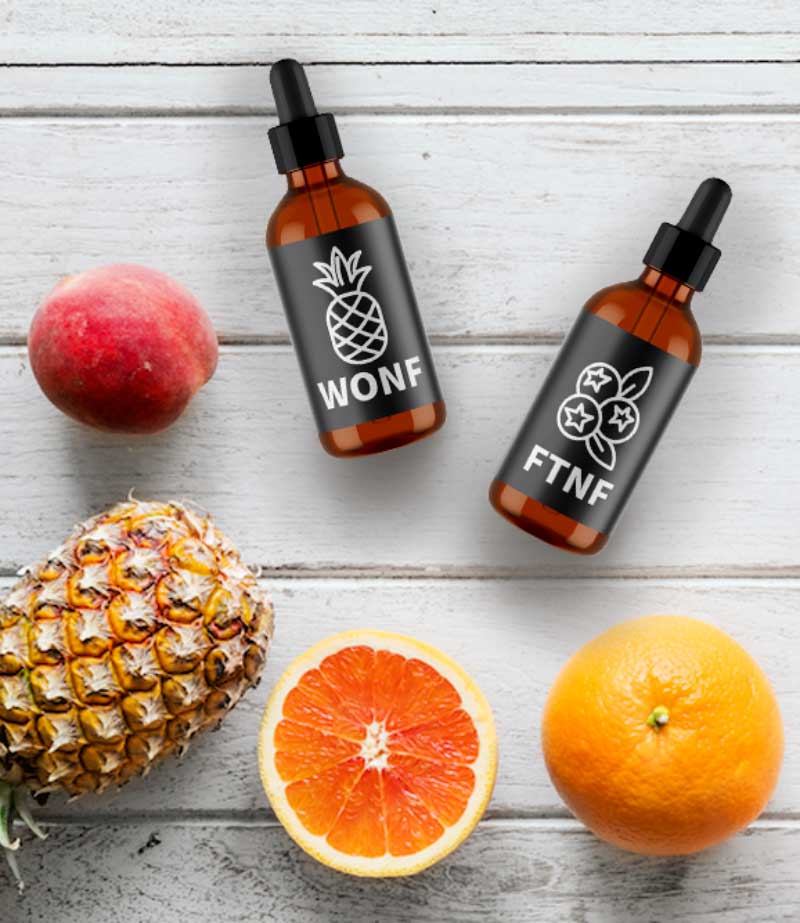
The terms WONF and FTNF are prevalent in the world of natural flavours. But what do they really signify? Understanding the nuances is needed to ensure correct labeling of products. Let’s dive deeper.
WONF stands for ‘With Other Natural Flavours’. When you see WONF on a label, it signifies that the primary flavour is accompanied by other natural flavouring agents, making the taste profile more intricate and layered.
FTNF or ‘From the Named Fruit’ on a label assures that the flavour originates directly from the specified fruit, giving you the most authentic experience of the fruit’s taste. These natural flavours stay true to their source. Often, they are labeled as single-source or true-to-fruit flavours.
Regulations for the “organic” label
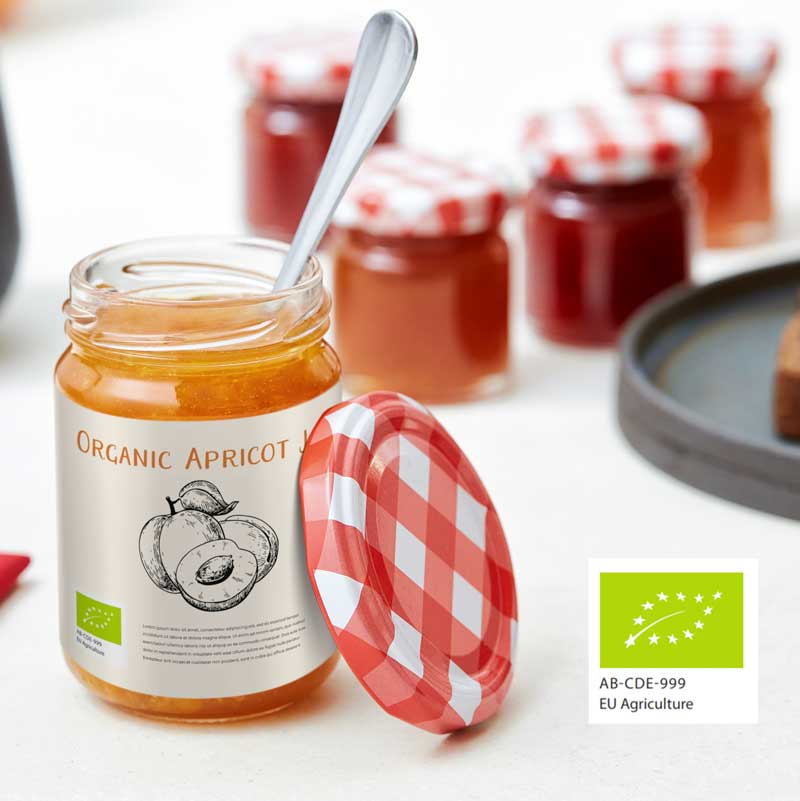
The “organic” label is stringently regulated in many countries, encompassing cultivation, processing, and labelling standards. Ingredients must meet specific criteria, including non-use of synthetic pesticides and genetically modified organisms. Certification ensures adherence to these guidelines, providing consumers with confidence in the integrity and sustainability of organic flavours. This label signifies a commitment to responsible agriculture, environmental preservation, and healthier, more transparent food choices.
On 1 January 2022 the new EU Organic Regulation started to apply. According to this regulation, products that have undergone processing can be labelled as organic only when a minimum of 95% of their agricultural ingredients are of organic origin. This rule extends to related terms like “bio” and “eco.” If the components used include non-organic elements, the final product cannot bear the organic label. However, it is permissible to indicate the organic status of specific ingredients on the ingredient list or sales description. If the processed ingredients constitute at least 95% organic and adhere to the guidelines of the new Organic Regulation, then these terms can be used. For instance, the label may read: “Water, cane sugar (organic), orange, lemon flavour (organic).”
Order your flavours at 1-2-Taste
Experience exceptional flavours at 1-2-Taste. Discover a diverse range of high-quality, natural and organic flavour options to elevate your food creations. With a commitment to excellence, we offer a seamless ordering process, ensuring you receive the finest ingredients for your creations. Savour the difference of our carefully curated flavours – your gateway to taste innovation starts here.

Want to explore more natural flavours and extracts?