- Posted on:
Applications in food manufacturing
Yellow pea protein’s adaptability allows it to be used across diverse product categories:
Plant-based meat alternatives:
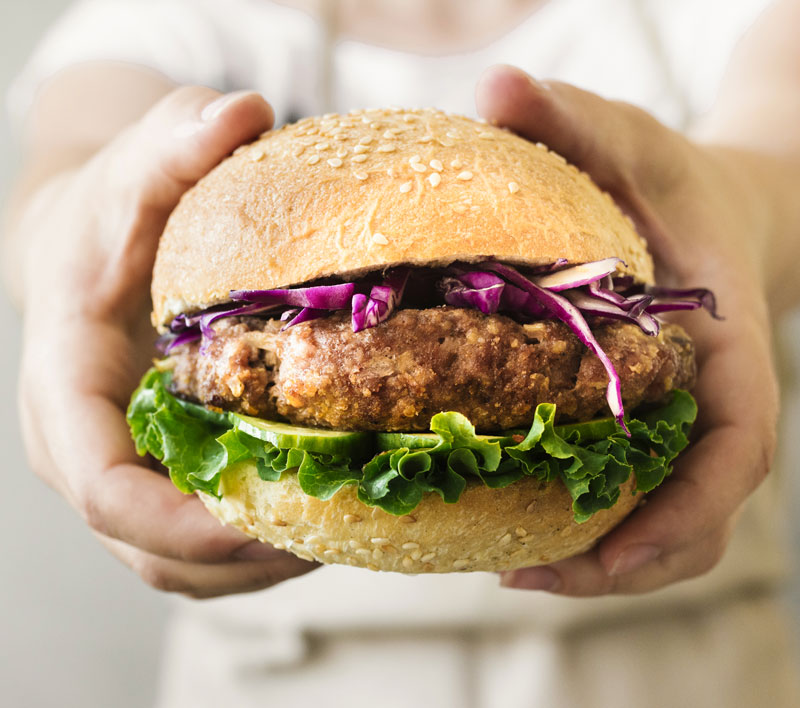
Its functional properties make it ideal for creating meat substitutes like burger patties and minced meat. It holds 40% of the global market share in this segment due to its ability to mimic the texture of meat.4
Dairy alternatives:
Used in plant-based milk, yogurt, and cheese products due to its ability to form soft gels and curds.4
Nutritional supplements:
Its high digestibility and rich amino acid profile make it popular for sports nutrition products and meal replacement shakes.5
Baked goods and snacks:
Adds nutritional value to cereals, pasta, energy bars, and even popcorn without altering taste significantly.
Market growth and opportunities
The global yellow pea protein market is booming. It is projected to reach $1.09 billion by 2029, growing at a CAGR of 15.8% from 2022.¹ Key drivers include:
- Rising veganism trends worldwide.
- Increased demand for allergen-free and gluten-free products.
- Government initiatives promoting plant-based diets in regions like Asia-Pacific.
Market growth and opportunities
Challenges for manufacturers
While yellow pea protein offers numerous benefits, manufacturers should be aware of specific challenges:
- It is not a complete protein as it lacks some essential amino acids. Combining it with other plant proteins (e.g., rice or quinoa) can address this limitation.
- Potential allergenicity in rare cases should be considered during product formulation.
How food manufacturers can leverage yellow pea protein
To capitalize on the growing demand for pea protein:
Innovate product lines:
• Develop new plant-based meat or dairy alternatives using yellow pea protein.
• Introduce fortified snacks or beverages targeting health-conscious consumers.
Focus on sustainability:
Highlight the eco-friendly aspects of pea protein in marketing campaigns.
Collaborate with experts:
Partner with ingredient suppliers or research institutions to optimize formulations.
Frequently asked questions
No, yellow pea protein is not considered a complete protein on its own as it is low in certain essential amino acids, particularly methionine and cysteine. However, it can be easily combined with other plant-based protein sources like rice or quinoa to achieve a complete amino acid profile.
Depending on the processing method, yellow pea protein can have a slightly “beany” or earthy flavour. However, in many applications, other ingredients easily mask or complement this flavour. Techniques like flavour masking agents or careful formulation can minimize any unwanted taste.
Yellow pea protein is generally considered hypoallergenic compared to soy or dairy. However, rare cases of allergenicity have been reported. It is essential to clearly label products containing yellow pea protein and consider potential cross-contamination in manufacturing facilities.
Yellow pea protein offers several advantages, including high solubility, excellent emulsification, and gel-forming properties. It also has a relatively neutral flavour compared to some other plant proteins. Its sustainability profile is also a significant advantage, requiring less water and energy to cultivate than many other protein sources.
At 1-2-Taste, we provide high-quality pea protein options, including isolates and concentrates, sourced from reputable suppliers. Our team can help you choose the best type for your specific application and production needs.
You can order samples online on the product page of the product of your interest. No sample option available? To request a sample or discuss your specific requirements, please contact our sales team at [email protected] or visit our website at https://www.12taste.com/contact-us/. We are happy to assist you with your product development needs.
Yes, yellow pea protein is naturally gluten-free, making it an ideal ingredient for gluten-free product formulations.