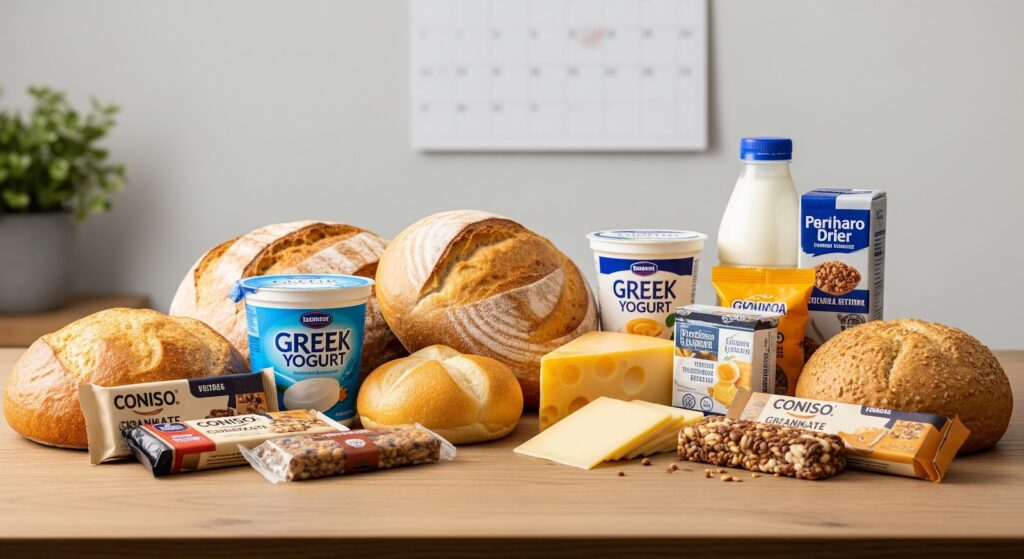
Natural vs. synthetic: what’s the real difference?
Synthetic preservatives are lab-made. They’re effective, cheap, and easy to use, but some come with baggage — whether that’s actual health concerns or just bad public perception.
Natural preservatives, as the name suggests, are derived from plants, minerals, or natural fermentation. We’re talking about things like vinegar, rosemary extract, sea salt, or cultured wheat flour. They’re generally seen as cleaner and more “friendly” on a label.
The truth? Synthetic options still dominate in some categories, but natural ones are catching up fast — and in many cases, they perform just as well.
Common natural preservatives you’ve probably eaten this week
Here are some you’ve likely come across without realizing:
- Vinegar (Acetic Acid): Works by lowering pH so bacteria can’t grow. Been used for centuries.
- Salt: The OG preservative — draws moisture out of food so microbes can’t survive.
- Rosemary Extract: Packed with antioxidants; stops fats from going rancid.
- Cultured Wheat Flour: Fermented and naturally mold-resistant — a baker’s dream.
- Cultured Dextrose & Tapioca: Versatile, mild, and great for everything from sauces to snacks.
Why the switch to natural makes sense for brands
From what I’ve seen, there are three big reasons companies are making the shift:
- Consumers trust labels they can understand. “Rosemary extract” sounds a lot friendlier than “calcium propionate.”
- Regulations are tightening. In some markets, certain synthetic preservatives are facing stricter rules.
- Marketing power. “Made with natural preservatives” is an easy win for branding.
Spotlight: preservation solutions that actually work
If you’re in the food business and want to go natural, Nutek Natural Ingredients has some solid options:
- NuXtend® Cultured Wheat Flour (110): Ideal for breads and baked goods.
- NuXtend® Cultured Skimmed Milk (310): A go-to for dairy and creamy sauces.
- NuXtend® Cultured Tapioca (410): Perfect for gluten-free products.
- NuXtend® Cultured Dextrose (210): Great for snacks, dressings, and RTE meals.
They’re designed to keep food safe and fresh without messing with the flavor — which, let’s be honest, is the dealbreaker for most customers.
Wheat and tapioca: not just ingredients, but allies
Wheat-based preservatives are great for baked goods, mainly because they feel familiar to consumers. Tapioca-based ones are a lifesaver for gluten-free or allergen-sensitive products.
These aren’t just “swaps” for synthetic preservatives — they’re strategic choices that help you reach wider audiences without sacrificing quality.
How they actually work (without the science lecture)
Natural preservatives usually work in one of three ways:
- They lower pH to make food less inviting for bacteria.
- They bind water so microbes can’t use it.
- They release natural antimicrobial compounds during fermentation.
Think of them as bouncers at the door of a club — they’re not changing the music or the décor, they’re just making sure trouble doesn’t get in.
Flavor: the non-negotiable
One worry I hear a lot is, “Won’t natural preservatives change the taste?” The answer: if you choose the right one, not really. Modern solutions are made to be neutral so they can protect shelf life without touching the flavor profile you worked hard to create.
Cost: the honest conversation
Yes, natural preservatives can be pricier than synthetic ones. But the upside — fewer returns, less waste, stronger brand loyalty — often pays for itself. You’re investing in your product’s reputation.
Finding the right fit
There’s no single “best” preservative. What works for a bakery might not work for a plant-based drink. It’s about testing, tweaking, and balancing preservation power with taste and texture.