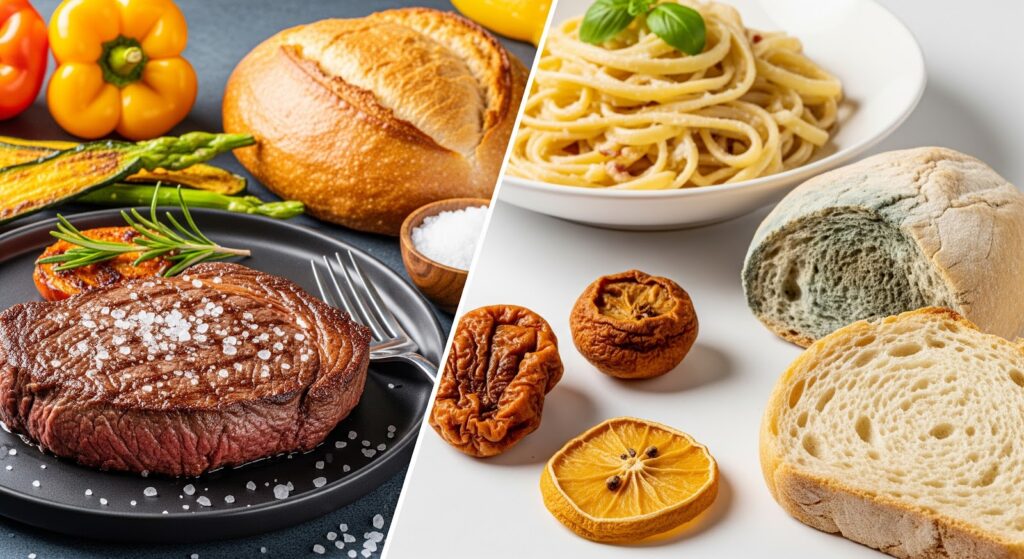
So, what makes salt such a pain to replace?
We’ve had some amazing formulation chats with R&D teams across categories, and this always comes up: “We tried cutting salt by 30% and the product just… fell flat.”
That’s because salt does much more than taste good. It:
- Boosts flavor perception
- Helps retain moisture in meat and dough
- Extends shelf life
- Enhances mouthfeel
Remove it carelessly, and your product can taste bland, feel dry, or even spoil faster. This is where strategic replacement — not just subtraction — comes in.
The good news? Potassium salts are the way forward
Over the past two years, we’ve been actively helping our clients reformulate using potassium chloride as a primary sodium replacement. It has a similar salty profile but contributes far less sodium, and even supports heart health.
Now, we won’t sugarcoat it. On its own, potassium chloride can have a slightly metallic or bitter edge. But paired with flavor modulators or used in the right blend, it works beautifully. We’ve seen this across seasoning mixes, soups, processed meats, and snack dustings.
Our go-to solution: Salt for Life® range (FSSAI-approved)
At 1-2-Taste, we’ve vetted and onboarded several salt replacements, and Salt for Life® from NuTek Natural Ingredients stands out every time.
It’s not just a “salt alternative”. It’s a smart, balanced blend of potassium salt and flavor tech that helps you cut sodium without sacrificing taste.
Here are four we recommend depending on your application:
These are plug-and-play for most R&D setups and are already being used by mid to large manufacturers in India and abroad.
How to approach sodium reduction in your product
You don’t have to redesign your product from scratch. A lot of brands we work with follow a 3-step approach:
1. Map salt’s role in your recipe
Is it just for taste, or also helping bind water? Does it influence texture or pH? Knowing this helps you decide how much you can remove and what needs to go in its place.
2. Start by replacing 25–30%
Don’t aim for 100% replacement at first. Start small. Blend potassium salt with sodium chloride, and test the flavor. Use sensory panels to get honest feedback.
3. Layer in flavor-enhancers if needed
Yeast extracts, umami compounds, and even natural flavors can help close any taste gaps. You might find you can go even lower on sodium once the balance feels right.
What you gain, beyond sodium reduction
Besides the health benefits, here’s what we’ve seen food businesses unlock:
- Access to “reduced sodium” or “heart-healthy” label claims
- Easier export to markets with strict sodium regulations
- Cleaner labels without artificial masking agents
- Improved consumer trust, especially in premium and health-conscious segments
And from a product standpoint, these ingredients often retain moisture, extend shelf life, and improve stability, so it’s not just about removing something, it’s about upgrading performance too.
Quick note on health: It’s real, not hype
We’ve seen studies (like the one in The Lancet) showing that cutting sodium by just 1 gram per person per day can prevent nearly 2 million deaths globally each year. That’s staggering.
So when we say this matters, we mean it. Especially in India, where heart health and hypertension are major issues, manufacturers have a role to play.
Now, let’s clear up some confusion
We sometimes get asked:
What is the best medicine for low sodium?
If someone has medically low sodium levels (called hyponatremia), it’s not about adding more table salt. That’s a medical condition treated under a doctor’s care.
What’s the best way to increase sodium levels?
Again, not your food product. If someone has a clinical deficiency, they need medical advice. Sodium reduction in packaged food is for the general population, not for treating individuals.
What we see next in the industry
Based on what we’re hearing from procurement heads and R&D teams, low-sodium product lines are becoming a strategic focus, not just a side project. We’re seeing demand across:
- Bakery
- Dairy
- Ready meals
- Snacks
- Health & nutrition foods
And with tools like Salt for Life®, the formulation process is smoother than ever.