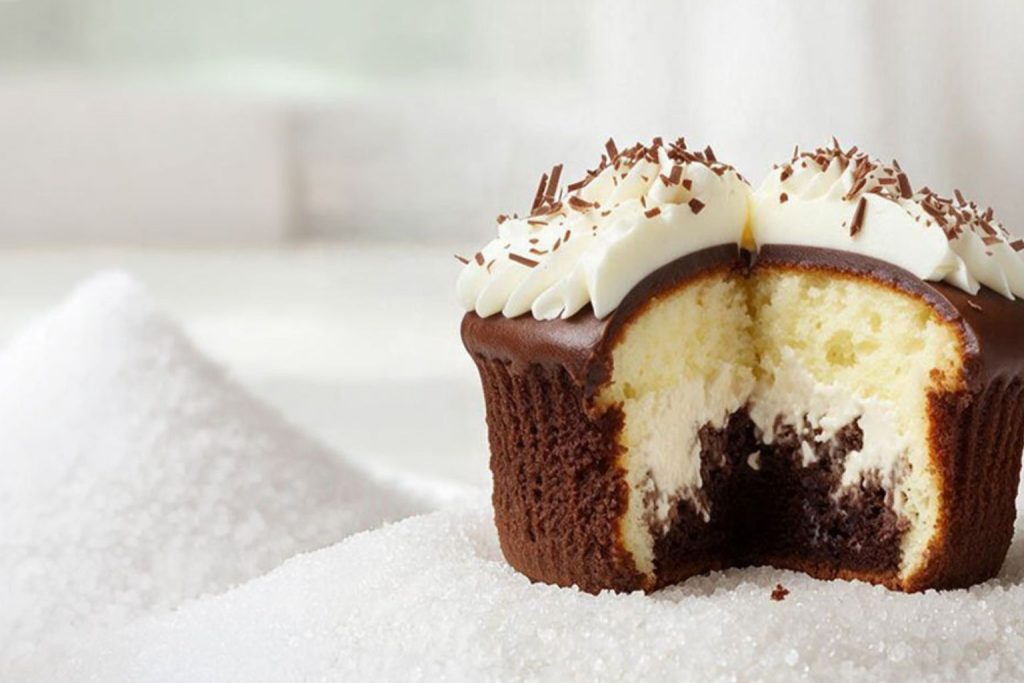
What is the best way to cut sugar?
Start by identifying how much sugar contributes to sweetness and how much supports the product’s physical properties. Then select ingredients to address those needs together.
Why high-intensity sweeteners may not be enough
High-intensity sweeteners can deliver sweetness at low inclusion levels, but they do not automatically replace the bulk, binding or solids lost when sugar is removed. Depending on the ingredient, aftertaste and sweetness profile may also need attention.
Use multifunctional ingredients
A broader approach combines sweetness management with ingredients that contribute functional solids or other useful properties. This gives R&D teams more flexibility than relying on a single sweetener
How to cut sugar in a recipe
Record the original recipe’s sweetness, texture, moisture, processing behaviour and shelf-life requirements. Set a realistic sugar-reduction target before selecting replacements.
Test the complete formulation
Reduce sugar in controlled stages, adjust ingredient ratios and assess the finished product. Check sensory acceptance, texture, stability and processing performance. A replacement that works in a nutrition bar may not behave the same way in a cake or beverage.
Is tapioca syrup better than sugar?
Not automatically. The right choice depends on the formulation, nutritional targets, cost and intended product characteristics. Tapioca-based syrups can contribute functional solids, but their sweetness, carbohydrate profile and performance differ from conventional sugar.
Introducing OligoSMART® Tapioca IMO Syrup
OligoSMART® Tapioca IMO Syrup 60220/60230 by Anderson Advanced Ingredients, this liquid isomalto-oligosaccharide ingredient can contribute sweetness, bulk and binding in suitable reduced-sugar formulations. Its specification lists at least 90% IMO on a dissolved-solids basis and at least 75% total solids.
| Particulars |
The Data Points |
| IMO content |
≥ 90% (dissolved-solids basis) |
| Total solids |
≥ 75% |
| Sweetness |
About 25–30% of sugar |
| Total sugars (typical) |
About 25 g per 100 g syrup |
| Energy (typical) |
300 kcal per 100 g syrup |
| Pack sizes |
1,400 kg tote (60220), 25 kg pail (60230) |
| Shelf life |
24 months |
| Origin |
China |
IMO reduces sugars, not calories, and does not count as dietary fibre. For a fibre claim, consider our soluble tapioca fibre, OligoSMART® RD TS90.
European Union (EU) status for IMO
In the EU, IMO is an authorised novel food, permitted only in specified food categories at set maximum levels. It is not authorised in alcoholic beverages. The label must name it “isomalto-oligosaccharide” and state that it is a source of glucose. Check your category against the Union list before trials.
Where can manufacturers evaluate it?
Consider trials in protein and nutrition bars, bakery products, gummies, confectionery, snacks and other relevant formulations. Evaluate inclusion levels against sweetness, binding, solids and processing targets. Importantly, IMO syrup is not automatically sugar-free, nor should it be assumed to replace sugar on a one-to-one basis.
Make sugar reduction work for your formulation
Cutting sugar without losing product quality requires more than swapping one ingredient for another. By evaluating the role of sugar, selecting multifunctional ingredients and testing the complete formulation, manufacturers can make informed decisions. Explore OligoSMART® Tapioca IMO Syrup through 1-2-Taste and assess whether it fits your product development goals.
Ready to test it? Request a sample, specification and nutritional profile from 1-2-Taste.