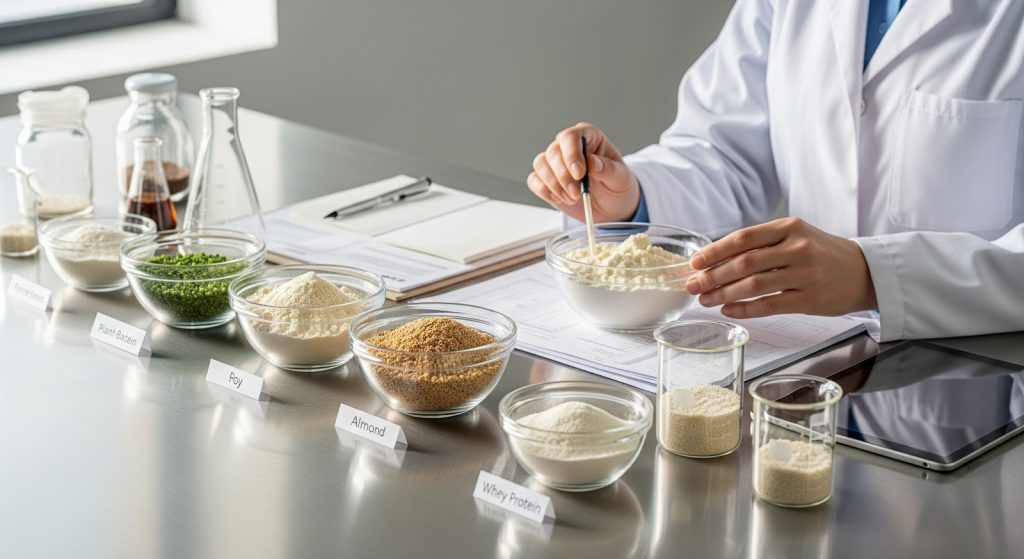
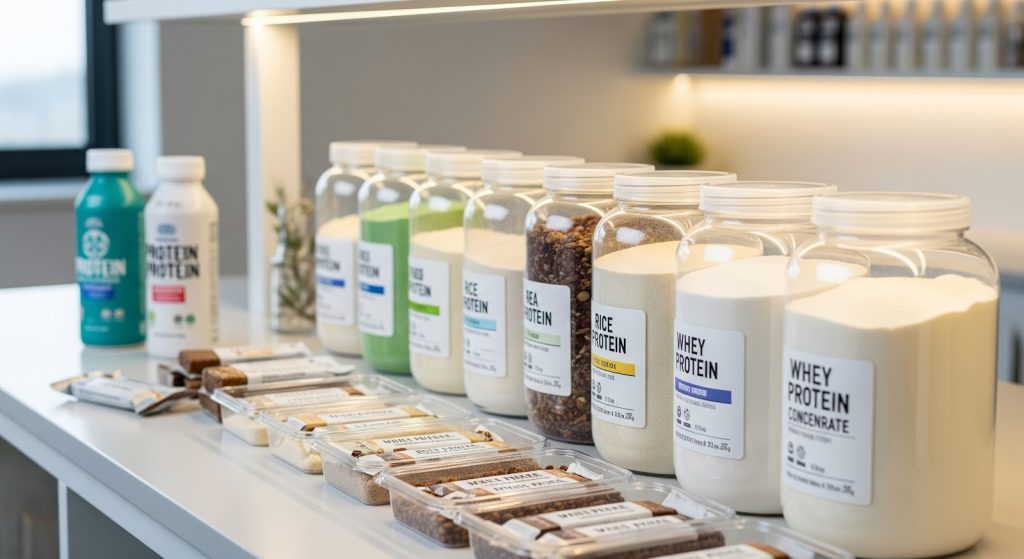
Understanding protein as an ingredient, not just a nutrient
Protein functionality in food and beverage applications
Protein contributes far more than nutrition. It impacts viscosity, foam stability, emulsification, water binding, and shelf life. A beverage protein must dissolve cleanly. A bakery protein must withstand heat. A snack protein must hold structure. Each application demands a different protein behavior.
Protein as a texture, taste, and stability driver
Think of protein as the backbone of your formulation. If it bends too easily, the product collapses. If it is too rigid, the mouthfeel suffers. The right balance is what separates premium products from average ones.
The 7 main proteins used in food formulation
Animal-based proteins overview
- Whey protein
- Casein
- Egg protein
These proteins offer high bioavailability and complete amino acid profiles. Whey protein powder bulk continues to be widely used in sports nutrition and performance beverages.
Plant-based proteins overview
- Pea protein
- Rice protein
- Soy protein
- Pumpkin and seed-based proteins
Plant proteins are gaining traction due to sustainability, allergen friendliness, and clean label appeal. This is where innovation is accelerating fastest.
What are the 4 components of a protein
Understanding protein fundamentals helps in smarter ingredient selection.
Amino acid profile explained
Proteins are built from amino acids. Essential amino acids determine nutritional quality. A balanced profile ensures better absorption and consumer trust.
Digestibility and bioavailability
A protein may look impressive on a spec sheet, but if the body cannot absorb it efficiently, it loses value. Digestibility scores matter, especially for clinical and sports applications.
Other components include structure and functionality, both critical for formulation stability.
What is the rule of thumb for protein selection
The simplest rule is this. Match protein functionality to application first, nutrition second, and cost third.
The 10 rule for protein explained
Many formulators follow the 10 rule for protein. At least 10 percent of the product’s caloric value should come from protein to justify a high protein claim. But this rule also extends beyond numbers.
If protein compromises taste or texture, consumers will not return.
How R&D teams apply the 10 rule practically
Smart teams prototype early, test protein interactions, and validate sensory performance before scaling. Protein selection is iterative, not linear.
Ingredients to look for in protein powder
Clean label and minimal processing
Modern consumers read labels carefully. Short ingredient lists, minimal processing, and transparent sourcing matter more than ever.
Solubility, taste, and stability
No amount of marketing can fix a gritty beverage or bitter aftertaste. Proteins must integrate seamlessly into the formulation without masking agents.
What is 100 percent protein powder
A 100 percent protein powder refers to the protein ingredient itself without fillers, sugars, or additives. It does not mean pure protein content by weight, but rather a single ingredient protein source.
This distinction is important for procurement and regulatory clarity.
Choosing between plant-based and whey protein
When whey protein powder bulk makes sense
Whey remains ideal for fast absorption, muscle recovery, and high-performance nutrition. It works well in powders and ready-to-mix formats.
Why plant-based protein powder is gaining ground
Plant-based protein powder is winning in mainstream food and beverage. Sustainability, vegan positioning, allergen reduction, and neutral taste profiles are driving adoption.
Brands are no longer choosing plant protein as an alternative. They are choosing it as a first preference.
Plant protein manufacturing considerations at scale
Working with a plant protein manufacturer in bulk
Consistency, traceability, and application support are critical. A reliable plant protein manufacturer bulk partner ensures batch stability and long-term scalability.
This is where ingredient sourcing becomes a competitive advantage.
Procurement checklist for bulk protein powder supplier
Procurement leaders should evaluate suppliers on more than price. Ask these questions:
- Is the protein application tested
- Is the supply chain traceable
- Are certifications consistent
- Is technical support available
A dependable bulk protein powder supplier reduces risk across the value chain.
Why 1 2 Taste Is the preferred wholesale protein powders partner
At 1-2-Taste, we curate ingredient solutions that work in real formulations, not just on spreadsheets. Our portfolio supports R&D innovation while meeting procurement efficiency.
Featured ProteoSmart protein solutions
Pumpkin Protein Powder Applications
ProteoSmart Pumpkin Protein Powder offers excellent digestibility, natural micronutrients, and a smooth mouthfeel. Ideal for beverages, nutrition bars, and clean-label snacks.
Vegan Protein Blend use cases
The ProteoSmart Vegan Protein Blend combines complementary plant proteins for balanced amino acids and improved sensory performance. It works beautifully in RTD beverages and dairy alternatives.
Brown Rice Protein for neutral formulations
ProteoSmart Organic Brown Rice Protein delivers a clean taste and stable performance, making it perfect for neutral flavored products and hypoallergenic formulations.
Available on the 1 2 Taste website.