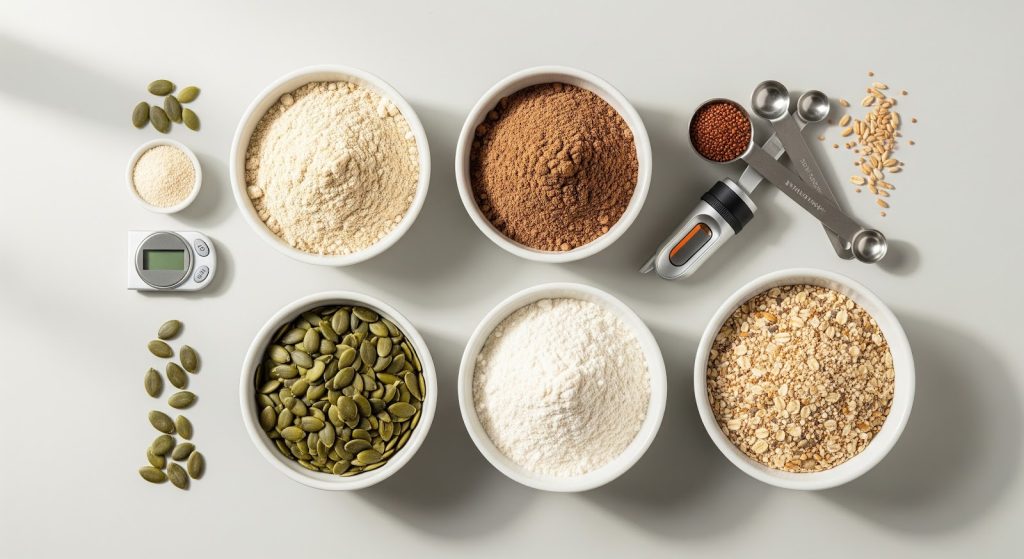
Key factors to consider when choosing proteins for baking
Heat Stability
Proteins must withstand baking temperatures without breaking down. Some proteins burn, some harden, and some lose binding power under heat.
Texture and Mouthfeel
A protein may look good on paper but feel gritty in real application. Smooth mouthfeel is critical, especially for cakes and cookies.
Flavor Neutrality
Proteins with strong off-notes increase masking costs. Neutral or mildly nutty profiles are preferred in scalable formulations.
Nutritional Density
R&D heads look for high protein concentration without excessive usage rates. Procurement teams look for cost efficiency per gram of protein delivered.
Common types of proteins used in baking
Whey protein powder bulk
Whey is widely used in bakery applications due to its solubility and amino acid profile.
When whey works best
Whey performs well in soft baked goods like muffins and pancakes. However, it can brown quickly and dry out products if overused. This is a limitation in high-heat or low-moisture recipes.
Casein Protein
Casein is slower to set and more heat-stable than whey.
Why is casein protein better for baking?
Casein retains moisture and maintains structure during long bake times. That makes it suitable for dense baked goods. However, it is dairy-based and limits clean-label or plant-based positioning.
Plant-based protein powder
Plant proteins are no longer alternatives. They are becoming first-choice ingredients in bakery innovation.
Rise of plant proteins in baking
Plant proteins align with vegan, allergen-friendly, and sustainable product strategies. Advances in processing have significantly improved their baking performance.
Which Protein Is Better for Baking: Animal vs Plant
Performance Comparison
Animal proteins offer predictability. Plant proteins offer versatility. With the right processing, plant proteins now deliver comparable structure with better label appeal.
Commercial Scalability Considerations
From a bulk protein powder supplier perspective, plant proteins offer more stable pricing, wider sourcing, and easier export compliance. This is critical for procurement and general management teams.
Best plant-based proteins for baking applications
Pumpkin Protein
Pumpkin protein delivers a fine balance of functionality and nutrition. It has natural binding properties and a mild nutty profile that works well in bread, cookies, and savory bakery items.
We strongly recommend ProteoSmart Pumpkin Protein Powder, available on the 1-2-Taste website.
Brown Rice Protein
Brown rice protein is hypoallergenic and heat-stable. It works exceptionally well in gluten-free baking and high-protein bread formulations.
Recommended option ProteoSmart Brown Rice Protein Organic, Available on the 1-2-Taste website
Vegan Protein Blends
Blends solve single-protein limitations. By combining complementary amino acid profiles, texture and nutrition improve simultaneously.
Best-in-class option ProteoSmart Vegan Protein Blend VIE Organic AG4485, Available on the 1-2-Taste website
Best protein to use in recipes based on application
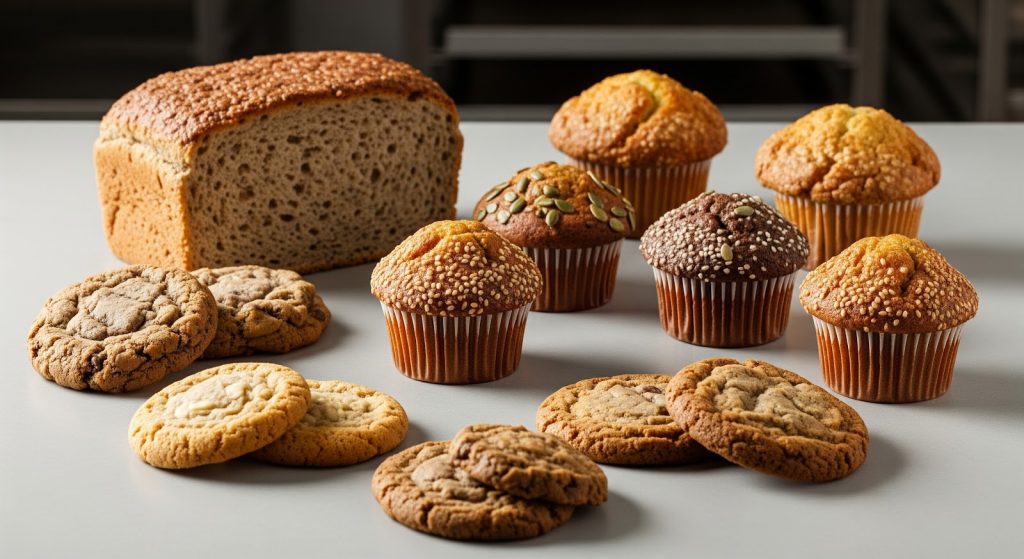
Breads and buns
Use brown rice protein or blended plant proteins for structure and volume retention.
Cookies and biscuits
Pumpkin protein works exceptionally well due to its binding and moisture retention.
Cakes and muffins
Vegan blends offer balanced softness without excessive dryness.
How to Increase Protein in Baking Without Compromising Quality
Partial flour replacement
Never replace flour fully. Start with 10 to 25 percent protein substitution and adjust hydration.
Multi-protein blending
Blending improves texture, amino acid completeness, and cost optimization.
Is protein powder good for baking?
Yes, protein powder is good for baking when selected correctly. The mistake many formulations make is using sports nutrition grade proteins rather than food-grade, baking-optimized proteins. This is where working with the right wholesale protein powders partner matters.
Can I use protein powder as a replacement for flour?
Protein powder should complement flour, not replace it entirely. Think of flour as the skeleton and protein as muscle. One cannot exist properly without the other.
Why 1-2-Taste recommends ProteoSMART proteins for baking
At 1-2-Taste, we curate ingredients that perform in real-world manufacturing conditions, not just in lab trials.
ProteoSmart Pumpkin Protein Powder
Ideal for clean-label, high-protein bakery innovation with excellent binding.
ProteoSmart Vegan Protein Blend
Best choice for balanced nutrition and consistent texture across applications.
ProteoSmart Brown Rice Protein
Reliable, scalable, and suitable for allergen-sensitive markets.
Choosing the right bulk protein powder supplier
For R&D heads, consistency matters. For procurement heads, pricing and supply stability matter. For business owners, scalability matters. As a plant protein manufacturer bulk sourcing platform, 1-2-Taste connects you with reliable, application-tested protein solutions.
Whether you are sourcing plant-based protein powder, whey protein powder bulk, or looking to buy pea protein powder alternatives, supplier credibility directly impacts product success.