Market demand for natural vegan sweetener alternatives
The demand for natural vegan sweetener alternatives has grown rapidly over the past decade. Several market studies indicate that consumers increasingly prefer plant-derived ingredients over synthetic additives.
For dairy producers, this trend creates an interesting opportunity. Even though dairy itself is not vegan, using plant-based ingredients inside dairy formulations signals transparency and health awareness.
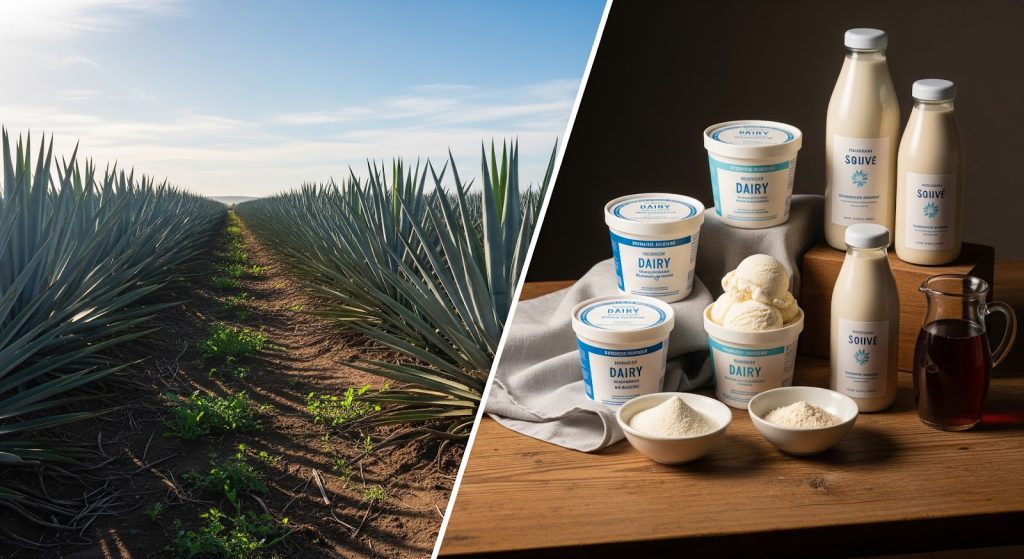
Agave inulin fits neatly into this narrative because it comes from the agave plant and functions both as a fiber and as a sugar reduction tool.
The role of low-glycemic sweeteners in modern dairy
Low-glycemic sweeteners help control the rate at which glucose enters the bloodstream. This matters to consumers who are concerned about diabetes, weight management, and metabolic health.
Agave-derived ingredients are often considered low-glycemic sweeteners compared with traditional sucrose. When used correctly, they can help reduce the glycemic impact of dairy desserts and beverages.
For manufacturers, this translates into products that appeal to health-conscious consumers without sacrificing indulgence.
What is agave inulin powder used for?
Agave inulin powder is primarily used as a functional dietary fiber and a sugar reduction ingredient.
It belongs to a class of carbohydrates called fructans. These compounds are not fully digested in the upper digestive tract. Instead, they travel to the colon where beneficial bacteria ferment them.
In food formulations, agave inulin serves several purposes:
- Reduces added sugar
- Adds dietary fiber
- Improves mouthfeel
- Enhances creaminess
- Supports gut health claims
This combination makes it extremely useful for reduced-sugar dairy formulations.
Understanding dietary fiber from agave fructans
Agave plants naturally contain fructans. When processed into inulin powder, these fructans become a valuable source of dietary fiber from agave fructans.
Unlike regular sugars, fructans provide structure rather than sweetness. This means they can replace part of the sugar content while maintaining the body and texture of dairy products.
For product developers, that is a major advantage.
Sugar reduction usually creates thin or watery textures. Inulin solves this problem by adding viscosity and stability.
Agave inulin prebiotic fiber benefits in dairy
One of the most exciting aspects of agave inulin is its prebiotic nature.
Prebiotics feed beneficial gut bacteria such as Bifidobacteria. This supports digestive balance and overall gut health.
Agave inulin prebiotic fiber benefits include:
- Improved gut microbiome support
- Enhanced digestive comfort
- Increased fiber intake
- Potential metabolic health benefits
When incorporated into dairy products like yogurt, these benefits align perfectly with the probiotic positioning of fermented dairy.
What is the difference between agave and agave inulin?
This is a question we hear often from R&D teams.
Agave refers to the plant itself and also to sweeteners extracted from it, such as agave syrup.
Agave inulin, on the other hand, is a fiber extracted from the same plant but processed differently.
Key differences include:
Agave syrup
- Primarily a sweetener
- High fructose content
- Used to add sweetness
Agave inulin
- Primarily a dietary fiber
- Low sweetness intensity
- Used for texture, fiber enrichment, and sugar reduction
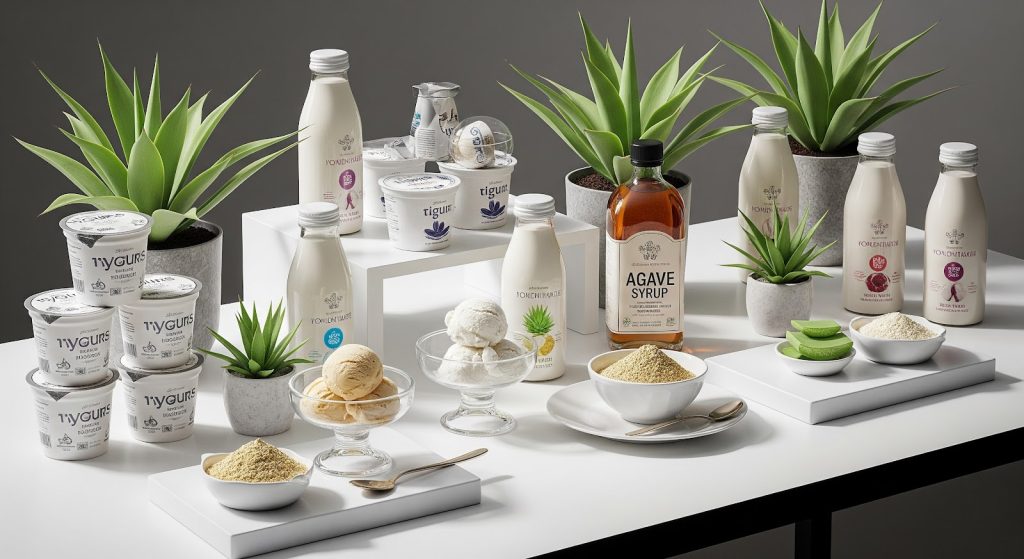
Both ingredients can be used together in dairy applications. For example, IMAG Organic Blue Agave Syrup provides sweetness while IMAG Organic Blue Agave Inulin Powder adds fiber and body.
How much inulin to replace sugar in dairy formulations
Sugar replacement using inulin depends on the formulation.
A common guideline in dairy products is replacing 20 percent to 50 percent of sugar with inulin while maintaining sweetness balance through other natural ingredients.
Because inulin is less sweet than sucrose, formulators often combine it with agave syrup or fruit-based sweeteners.
Technical considerations for R&D teams
When incorporating inulin into dairy systems, R&D teams should consider several factors:
- Solubility
- Processing temperature
- Fermentation compatibility
- Texture impact
In yogurt, inulin improves creaminess and reduces syneresis. In ice cream, it acts as a fat mimetic and improves mouthfeel.
Texture, mouthfeel, and sweetness optimization
Imagine removing sugar from ice cream. Without compensation, the result would be icy and thin.
Inulin works like a structural scaffold. It fills the gap left by sugar, helping maintain the creamy sensation consumers expect.
That is why it is often used in reduced-sugar frozen desserts.
Practical applications of agave inulin in dairy products
Agave inulin is surprisingly versatile.
Yogurt and fermented dairy
In yogurt, inulin enhances the body and improves fermentation stability. It also supports the digestive health positioning that yogurt brands often promote.
Ice cream and frozen desserts
In frozen desserts, inulin acts as a fat replacer and texture enhancer. It reduces sugar while maintaining scoopability and creaminess.
Dairy beverages and flavored milk
In dairy beverages, inulin adds subtle sweetness and improves mouthfeel while boosting fiber content.
Combining agave inulin with other natural ingredients
Sugar reduction rarely relies on a single ingredient.
Smart formulations combine fibers, plant extracts, and natural sweeteners.
Health benefits of aloe vera powder in dairy innovations
Aloe vera is gaining attention in functional foods.
The IMAG Aloe Powder 100x offers concentrated aloe components that provide potential digestive support and functional beverage applications.
Health benefits of aloe vera powder include hydration support and digestive wellness.
Aloe vera prebiotic effects and digestive support
Aloe vera prebiotic effects complement the fiber benefits of inulin. Together they create a formulation that supports digestive health while maintaining product stability.
This pairing works well in yogurt drinks and functional dairy beverages.
Product solutions from 1-2-Taste for sugar reduction
At 1-2-Taste, we provide a curated portfolio of natural ingredients designed for modern food formulation.
Key solutions include:
Together these ingredients help manufacturers develop next generation reduced-sugar dairy products.
What are the side effects of agave inulin?
Agave inulin is generally considered safe for most people when consumed in moderate amounts.
However, excessive intake may cause mild digestive discomfort such as bloating or gas. This happens because inulin is fermented by gut bacteria.
For product developers, gradual fiber inclusion helps consumers adapt.
Who should not eat inulin?
Individuals with certain digestive sensitivities, particularly those following low FODMAP diets, may need to limit inulin intake.
Food manufacturers should consider labeling transparency and serving sizes.
Who should not eat agave?
People with severe fructose intolerance should avoid agave-based sweeteners. This condition is relatively rare but important to consider in product labeling.
Is agave harmful to the liver?
Agave syrup contains fructose, and excessive fructose intake from any source may contribute to metabolic issues.
However, moderate use in balanced formulations is not considered harmful for healthy individuals.
Using agave inulin instead of high sugar levels can actually help reduce overall sugar intake.
What is the healthiest sugar substitute for dairy formulations?
There is no single perfect sugar substitute.
The healthiest solutions often combine natural fibers, plant-based sweeteners, and low-glycemic ingredients.
Agave inulin stands out because it adds fiber while supporting sugar reduction.
Is agave as unhealthy as sugar?
Agave is not identical to sugar. The health impact depends on how it is used.
When used excessively, any sweetener can contribute to excess calorie intake.
However, combining agave syrup with agave inulin allows formulators to reduce overall sugar content while maintaining flavor and texture.
Strategic advantages for procurement and product development teams
For procurement and general management teams in the F&B industry, ingredients like agave inulin provide multiple strategic advantages.
- They support sugar reduction goals.
- They improve nutritional profiles.
- They align with clean-label positioning.
Most importantly, they allow manufacturers to innovate without sacrificing consumer enjoyment.